Industry Trends
Breaking down used electric vehicle (EV) values

Used EV valuation continues to be a challenge as pricing volatility for new EVs and ongoing questions around the best way to measure battery health influence residual values. To better understand how this segment is performing, we analyzed January 2024 month-end inventory by model year for select powertrains and models.
Younger used EV prices are declining faster, but eventually stabilize
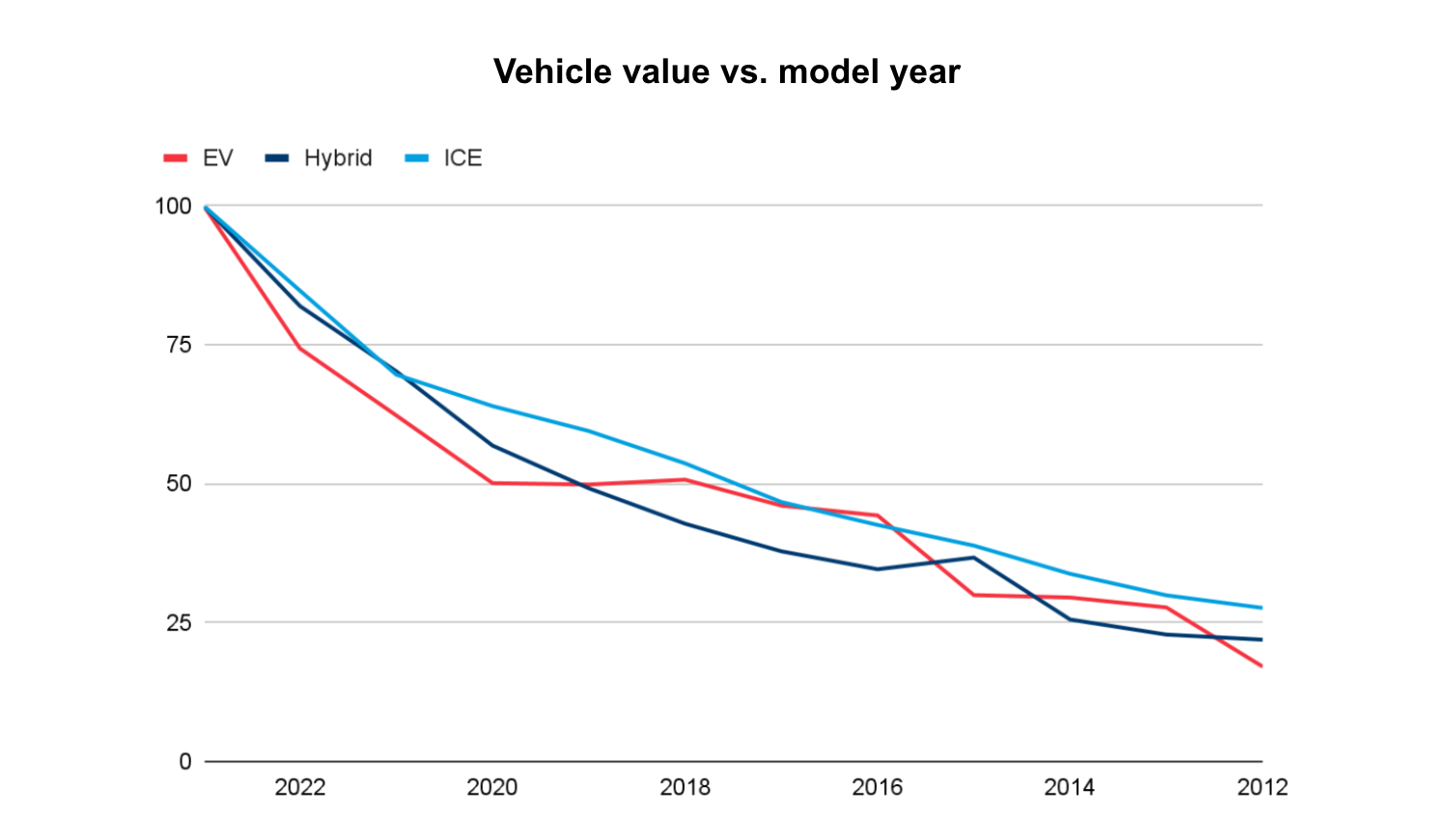
Comparing used price by model year, the average used EV has a faster decline than both internal combustion engine (ICE) and hybrid powered vehicles. In three years (e.g. a 2020 model year), the average used EV listing price declined 28% faster on a relative basis than an ICE powered vehicle. For example, the average list price of a 2020 model year EV listed on CarGurus is half that of a 2023 model year EV. On the other hand, a comparably aged hybrid has declined nearly 43%, and ICE vehicles have dropped just 36%.
While there is a large disparity between prices in the early years of EV life, by around seven years old (2017 model year) the variance improves to neutral compared to ICE, and at a premium to hybrids. This shows that EVs experience faster than normal price volatility in the early years of ownership before leveling out to more stability. It’s important to note that there are significantly less used EVs and hybrids on the market compared to ICE powered vehicles in general—and particularly at older ages. As this inventory grows and matures, we could see this eventually level out.
What’s causing this volatility? A multitude of factors:
- Used EV prices saw a lot of appreciation in the spring of 2022 as concern about gas prices and limited used EV supply helped prices increase 28% in just six months time (June 2022 vs Jan 2022). After this build-up, EV prices have been on a slow climb down.
- OEMs have been adjusting the price of new EVs downward to increase demand or protect market share. These cuts are great for new EV buyers, but impact the value of used EVs.
- EV tax credits for new vehicles have helped to spur sales, but they could also be influencing the value of used EVs.
Bright spots for select EV models
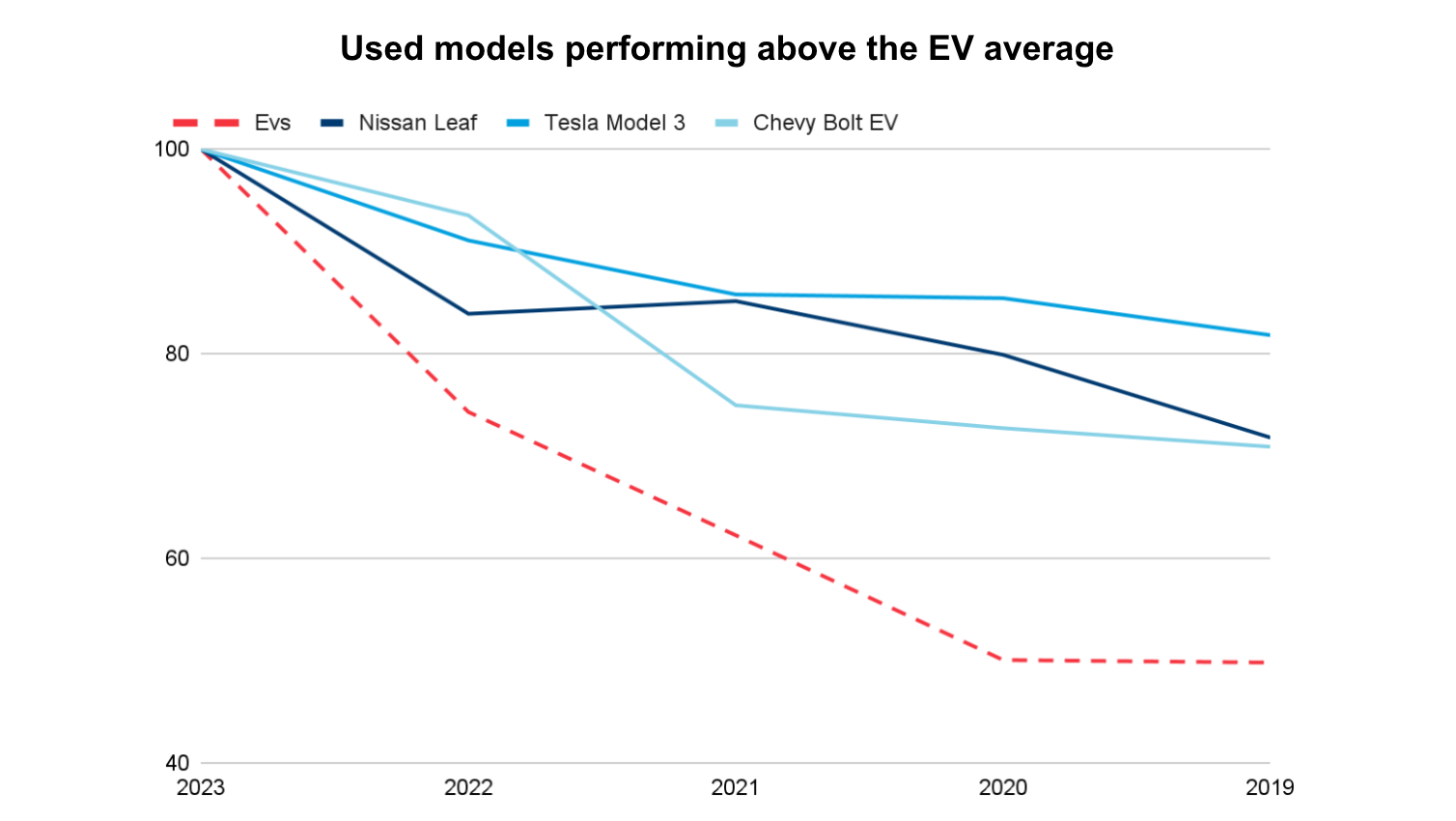
While used EV prices are declining at a faster rate, that's not the case for all EVs. In particular, models that have been on market for longer are maintaining values above the average rate seen for all used EVs. These value retainers include the Nissan Leaf (+60% over the used EV average relative to the 2020 model year EV baseline), Chevrolet Bolt (+45%), and Tesla Model 3 (+71%). Since these models have been on the market longer, the used price curve has normalized more. Additionally, for Tesla’s Model 3, any price cuts took place previously and have already been absorbed by the market.
How does mileage impact EV values?
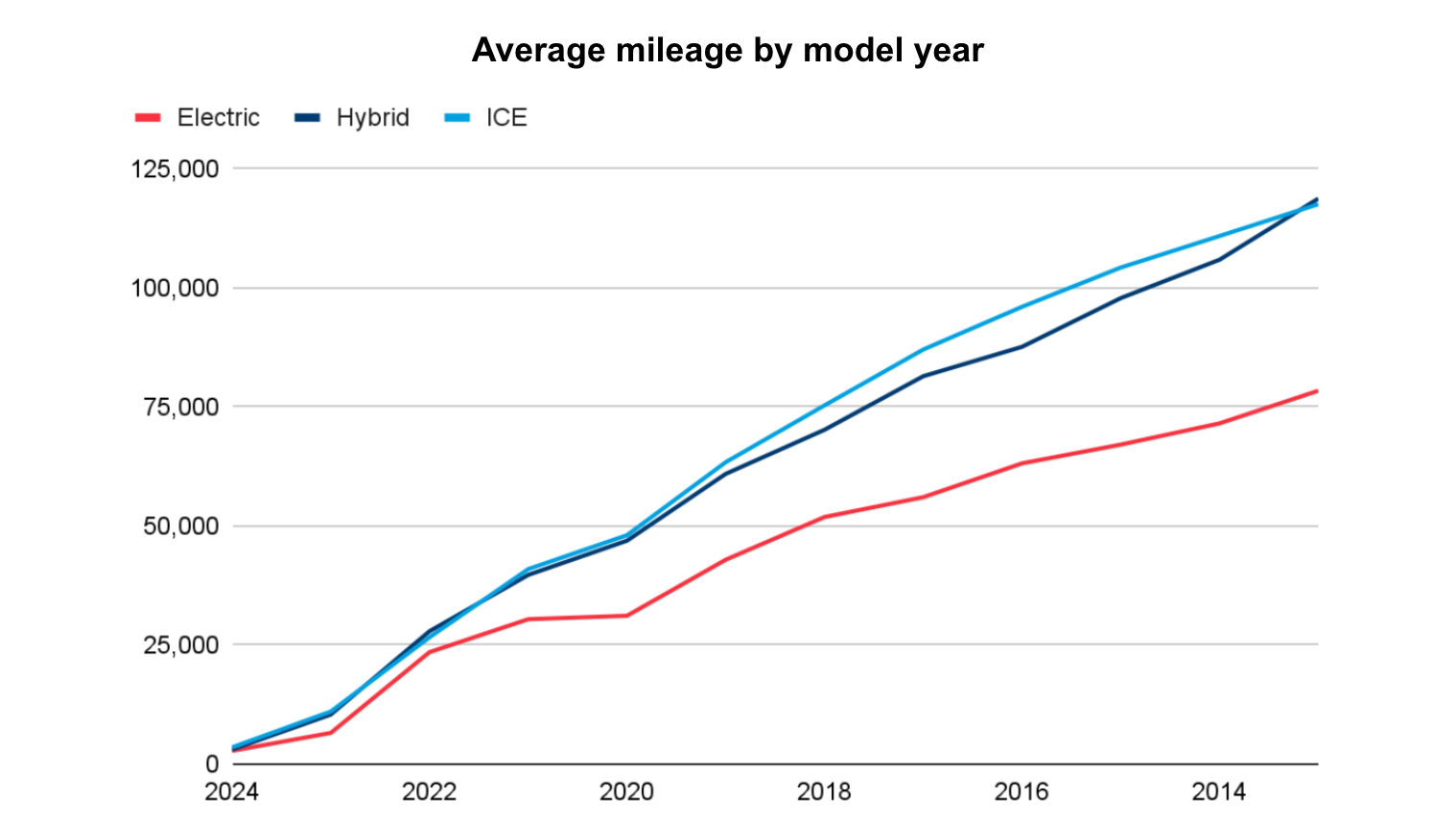
A real eye opener is that EVs are dropping faster in price with significantly less mileage than ICE or hybrid counterparts. A 2020 model year EV has an average mileage of 31.1k vs 46.9k for hybrid and 48.1k for ICE. That’s 33.6% and 35.2% less, respectively.
Why is the EV mileage so much less? It appears that early adopters may be overcoming range anxiety by primarily using their vehicles for trips closer to home or shorter trips in general, reducing overall mileage and vehicle wear and tear.